Posts

Showing posts with the label research

Last week before hand in

The last week before all our work is due in. Where has the time gone? I can’t believe we are coming the end of module 3, the end of the course. A few thoughts from the group meeting we have had recently. Using reflection to keep learning Its good to take some risks Be clear in your communication and language Continue to evolve and develop your work Analysis methods- triangulation- finding common, emerging themes throughout all the data of each method of data collection. E.g., reflective journal, interviews and literature. Make sure you analyse the data rather than describe it. What is the data telling you- link it back to yourself and your practice. Critical reflection- explore how this research has changed you and will continue to change you and your practice. Editing- check for: Adjectives Long sentences Repetition   I look forward to hearing about everyone else’s research in the presentations in a few weeks.

Module 3 Meeting

Last week people on module 3 were invited to a zoom call to see where we are all at with our research. It was lovely to catch up with everyone and see where their ideas and research have taken them. Below are a few key points that I took from the meeting. This process is cyclical, not linear. We aren’t looking for a set answer to end our research but trying to gain a deeper understanding which we can then feed back into our lives and practices which can then bring up more questions. Always link it back to my practice- this is a common theme through our research. Identify themes found from analysis clearly and state why it is a theme. Connect the themes we find in our research back to our professional practice. In our analysis we are looking for patterns, it isn’t about giving raw data. But can use quotes from interviews to show how themes have come up. Include methodology in your overview, what you did, why you did it, how it went, what changed Artefact is a ‘practice-based thing’ th...

Interviews

Last week we had a zoom call about how to conduct interviews. Here are a few of the main point I picked up from the discussion. Be open and receptive. Create space for your participants so they can open up about what they want to talk about. Don’t go in with a fixed idea about what you want to find. Let the data you collect speak for itself. You don’t need to include all the information you collect from your interviews. Be selective. Use open questions to allow for further discussion, rather than yes or no answers. Start with an easy question to break the ice. Be an active listener. E.g. Nod, comment on what the participants are saying. Respect everyone’s opinion, even if you don’t agree. Don’t let your own opinions get in the way of the data. Be aware of your own bias and question it. I hope this helps people to carry out their research!

Thematic Analysis

Image
The last few months I have been collecting my data on the use of touch and dance ready for analysis. I decided to use thematic analysis with triangulation to find the common, emerging themes across my data. Having found several themes through my literature research, my interviews and my own experiences, I decided to start mapping out these themes. However, when it came to writing them in my research report I was struggling with how to structure my findings. I felt like I had gathered so much information but I didn't know what to do with it once I'd analysed it. Below is a video that I found really helpful for the layout and structure on presenting my themes in my research report.   Here are some of the main points I have taken away from this video: Be clear  State what the research is about and then explain the themes that have come from the research.  It is personal preference how you lay out your findings  Separate your themes into different sections...

Contact Improvisation

Image
As my research is focused around touch and dance, contact improvisation has been of great interest to me. Below is a video I have watched and analysed as part of my research.  Contact Improvisation is a form of dancing that requires touch. The whole art form is created around people moving together and being connected physically. This physical connection allows for a constant flow of information between the bodies involved.  This means that not only are we being physically touched, but also mentally. It gives permission for us to move in the moment, without judgement of what is right and wrong. The focus is on the information we are giving and receiving,  which allows for freedom of body, mind and spirit.  I would love to hear what you think about this video.  Bibliography   Video available at:  We Rise and Fall Together | Contact Improv | Nathan Dryden | TEDxSaltLakeCity - YouTube  (Accessed 27/03/2021)

Touch

Image
It has been 2 weeks since lockdown lifted for schools and so I have been back at work with the children. It has been tiring being back, but lovely to see everyone in person and not through a screen. It has been a busy but rewarding time. Since being back I have noticed a change in the children. Many of them seem to be craving a close connection to the staff, including staying in at breaks and lunch to talk to us, drawing us lots of pictures or writing us notes, but also some of them wanting to hug us. This is really interesting to me as it fits into my research on the use of touch. As teachers, we have to be very careful and strict with the use of touch as sadly there have been cases of misconduct reported in the media, which have made people very wary of touch. We also have to be very strict due to Covid-19 and the health and safety of everyone. There is a lot of negative associations with touch, but very rarely do we acknowledge the importance of it. Touching is ‘an essential e...

Referencing

Image
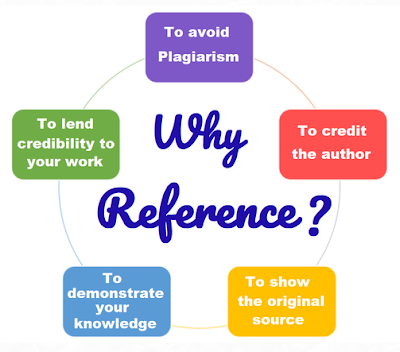
When doing any piece of writing or work it is important to reference where the information you are writing about is coming from. This includes but not limited to, any kinds of essays or reports, books, articles, podcasts, pieces of art, videos and blog posts. Sometimes I have read something and been inspired to write something from it, and so I need to make sure that I state the original source of where I got my inspiration. If you are talking about someone’s idea, but aren’t using quotes, it is still important to reference them. A great site to use is: https://www.citethemrightonline.com/ It explains clearly how to reference the many different styles of sources. It shows you how to cite sources in your piece of writing and in the bibliography.   This is an example of using a quote from a book; Montagu (1986) explains that touch is referred to as ‘the mother of the senses.’ (pg. 3) Bibliography Montagu A. (1986), Touching- The human Significance of the skin, third edi...

Module 3 Meet- Terminology

Image
Last week the module 3 students had a zoom discussion group. Some of the students took it in turns to present where they are in their research. This was really interesting to listen to as everyone is researching different topics surrounding their professional practice. Something we discussed as a whole was our use of terminology and how important it is to express ourselves using the correct terms. I have broken down some of the key terms below. Methodology- the approach we are taking for our research. e.g. non positivist, positivist, qualitative, quantitative Method- the ways in which we collect our information. e.g. interviews, surveys, secondary research, literature, questionnaires, focus groups, experiments Ethical Considerations- thinking about any issues that may arise due to your research taking place.  Ethical Protocols- the procedures put in place to ensure minimal or no harm is done due to the research taking place.    B ibliography Top 10 Research Quotes...

Vulnerability in Research

Image
At the beginning of January, I had the privilege of watching the previous module 3 presentations. It was lovely to see the diversity of the topics everyone had researched and how it related to them and impacted their practices and lives. Everyone did an amazing job at explaining their research. I especially enjoyed seeing the artefacts that had been created because they seemed so personal and relevant to each individual. Some examples are; writing and illustrating a story book, creating a pop-up book, Russian Dolls, choreographing dances, and singing songs. The freedom that comes with creating the artefact can be really special- it can be whatever is relevant to you and your practice and research.   What was eye-opening to me was how each artefact and research topic revealed something about the researcher. It has got me thinking how research is a very personal thing- especially qualitative research- not only for the participants and the data collected, but for the researcher to...

Gantt Chart

Image
I know there are lots of different ways to make a Gantt Chart, but I found this video really helpful. It takes you through a step by step version of what to do.  Let me know if you found this helpful!  Bibliography  https://www.youtube.com/watch?v=z76i2SOaYy4&t=705s

Interviews

Image
This week I joined a discussion skype about interviews with other module 2 and 3 students. It was a good opportunity to see the perspectives of interviews from the different modules. Something that I found interesting from this session is that it isn’t about getting an answer. We can plan our inquiry into the ground but the reality is, we don’t know what we are going to find and what data we will collect. We do not have control over everything. This means that some of the thoughts we had planned may not work for the data we received… and that is ok. Things change, we don’t always have control and that is ok. What this does, is give us an opportunity to look at ourselves and question why we thought certain things, why did we make those assumptions or have that bias? It gives us a way to learn more about ourselves and to push our own boundaries. Qualitative data is very different from quantitative data regarding what information is collected. With qualitative data the researcher is ...

Ethical Considerations

Image
Recently I watched The Social Dilemma. It is a documentary and drama about social media and the impact it has on us as a society. It explores how some of the people who were involved in developing and creating various social media platforms, have decided to leave their jobs, the industry or speak out about the ethical issues they felt arose whilst working for these companies. ‘Nothing vast enters the life of mortals without a curse’  Sophocles The people that were interviewed spoke of how they didn’t realise or think about the consequences that social media would have. When they started out, it was very focused on the good and positive that these platforms created- i.e. being able to contact relatives who lived miles away. It seems that less thought was given to the negative impacts and implications. So, without looking at the ethical considerations, they were not fully prepared for the future. I found the actual content of the documentary quite worrying. Algorithms have been...

Nimble Thinking and Research- Module 2 Skype

Image
On Friday we had a skype session with a module 2 focus. We spoke about how the conversation and discussion is an art form. It is not about reaching a final destination but about mapping and linking together different ideas. Nimble Thinking Module 2 is focused on creating an inquiry proposal. We were reminded that we are researching how to research. This means it isn’t just about ‘what’ we are going to research (topic) but ‘how’ we are going to research it (methodology). We spoke about mapping both of these ideas separately but how they work in harmony with each other. Adesola mentioned the idea of ‘Nimble thinking’ where you have more than one idea going on at once. This got me thinking about when I’ve taken a ballet class. To get the correct posture and technique there are many different things to think about; turnout, core engaged, arm positioning, shoulders down, back not arched, head position, pulling up your legs, not rolling your ankles, pointed toes…the list goes on. But all...