Posts

Writing Zoom- All Modules

Image
This past week we had a module 1, 2 and 3 zoom call specifically focused on writing. It was interesting to hear what guest speaker, Peter Thomas, had to say about it. These are a few of the main points I took from the meeting. Many different ways of writing; e.g. factual, personal, referencing, definitions. It’s important to know which style of writing is expected of you when writing an essay. In your introduction you are explaining; what, why and how Literature reviews are about giving your essay context, defining key themes, and giving background on examples and work already done When analysing data, it is important to look for themes and patterns It is ok to be selective about what you include in your essay- don’t just include everything you find. Include things that link, are connected and relevant Be aware of your word count   In your conclusion you are stating; what and why Sometimes it is important to make the writing personal by including yourself and your experiences ...
Referencing

Image
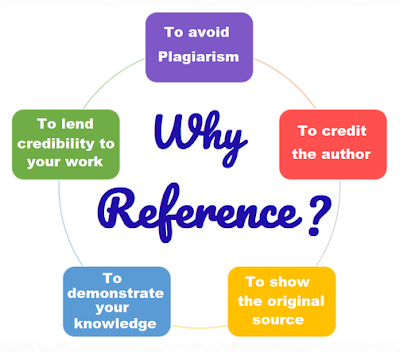
When doing any piece of writing or work it is important to reference where the information you are writing about is coming from. This includes but not limited to, any kinds of essays or reports, books, articles, podcasts, pieces of art, videos and blog posts. Sometimes I have read something and been inspired to write something from it, and so I need to make sure that I state the original source of where I got my inspiration. If you are talking about someone’s idea, but aren’t using quotes, it is still important to reference them. A great site to use is: https://www.citethemrightonline.com/ It explains clearly how to reference the many different styles of sources. It shows you how to cite sources in your piece of writing and in the bibliography.   This is an example of using a quote from a book; Montagu (1986) explains that touch is referred to as ‘the mother of the senses.’ (pg. 3) Bibliography Montagu A. (1986), Touching- The human Significance of the skin, third edi...

Contents Page

Image
Lately, I have been looking at the way to present our research report and critical reflection. I found this video that has helped me understand how to create a contents page. It breaks it down step by step which I found very useful! I hope it helps others too.  Bi bliography Creating a Table of Contents in Microsoft Word - YouTube  (Accessed 02/03/2021)

Module 3 Meet- Terminology

Image
Last week the module 3 students had a zoom discussion group. Some of the students took it in turns to present where they are in their research. This was really interesting to listen to as everyone is researching different topics surrounding their professional practice. Something we discussed as a whole was our use of terminology and how important it is to express ourselves using the correct terms. I have broken down some of the key terms below. Methodology- the approach we are taking for our research. e.g. non positivist, positivist, qualitative, quantitative Method- the ways in which we collect our information. e.g. interviews, surveys, secondary research, literature, questionnaires, focus groups, experiments Ethical Considerations- thinking about any issues that may arise due to your research taking place.  Ethical Protocols- the procedures put in place to ensure minimal or no harm is done due to the research taking place.    B ibliography Top 10 Research Quotes...

All Module Meet- Creativity

Image
This week we had a Zoom call where everyone on each module could attend. It was a great opportunity to see what everyone is currently doing within their module. Module 1- starting to talk about their practice and what it means Module 2- thinking about what they want their inquiry to be about Module 3- Looking at starting to gather data for their research Although each module is looking at different things, all of them link with some overall themes- the ones we spoke about are listed below, however there are many more. Creativity The idea of ‘self’ Experience Reflection Motivation and Inspiration Ethics Creativity was a really interesting point to start with as it is so personal to each of us, and so we all had a slightly different view on it. Some people class themselves as creative and others don’t. Here are some of the key points we spoke about with regards to creativity. Are we taught it? Or is it innate within us? Are we born with it? Are we showing our vu...

Vulnerability in Research

Image
At the beginning of January, I had the privilege of watching the previous module 3 presentations. It was lovely to see the diversity of the topics everyone had researched and how it related to them and impacted their practices and lives. Everyone did an amazing job at explaining their research. I especially enjoyed seeing the artefacts that had been created because they seemed so personal and relevant to each individual. Some examples are; writing and illustrating a story book, creating a pop-up book, Russian Dolls, choreographing dances, and singing songs. The freedom that comes with creating the artefact can be really special- it can be whatever is relevant to you and your practice and research.   What was eye-opening to me was how each artefact and research topic revealed something about the researcher. It has got me thinking how research is a very personal thing- especially qualitative research- not only for the participants and the data collected, but for the researcher to...

Reflection from Module 1 and 2

Image
It was lovely getting to see everyone on the group meeting, people who are new and people who are returning, like me. Can’t believe I am at the start of module 3- where has the time gone! It was great to refresh myself with some of the key points for this course. For those of you starting module 1 and 2 these points below really helped me through the modules. Handbooks- re-read these as many times as you need and mark certain pages that have important information on, so you can find them easily. Highlight and make notes on them as you need. You can also use the bibliography on the back to help guide you to more literature to read. Google Scholar is an amazing place to find literature- there is a link on the Unihub page to it. Blogs- use these in a way that is useful to you personally. Write about what resonates with you from the course. For instance, you could write about things you have found, or things that you have questions about. Also, go and check other people blogs who hav...